
Cultural Resources for SNAP-Ed
The updated Dietary Guidelines for Americans (DGA’s) 2020 – 2025 recommend tailoring educational materials based on personal preferences and culturally relevant dietary patterns. This page contains resources including information on diverse dietary patterns, eating behaviors, recipes, and educational materials in multiple languages.
DGA Food Sources of Select Nutrients
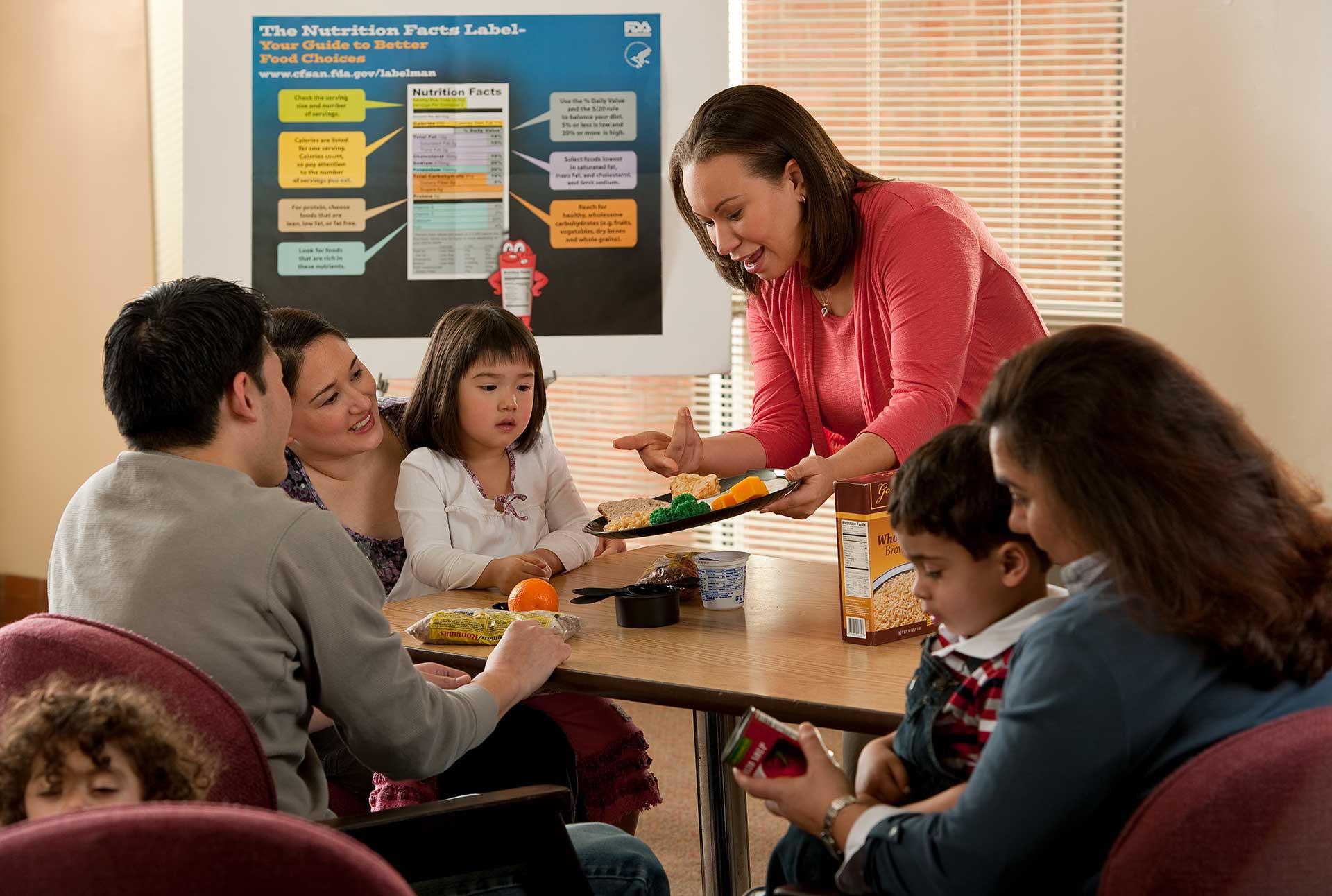
DGA Professional Resources
Cultural Toolkits (for print only)
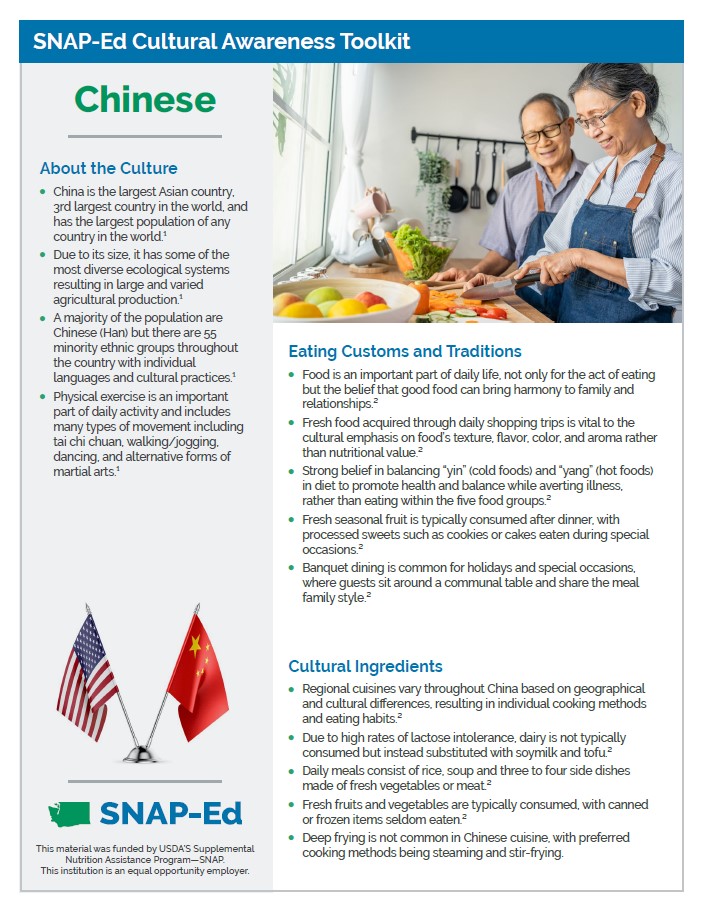
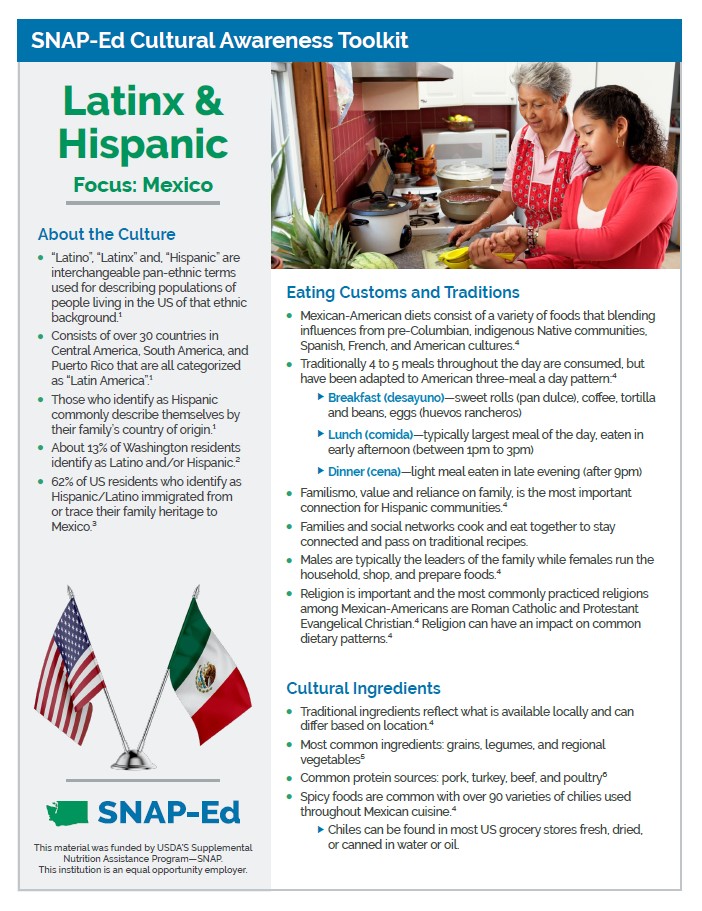
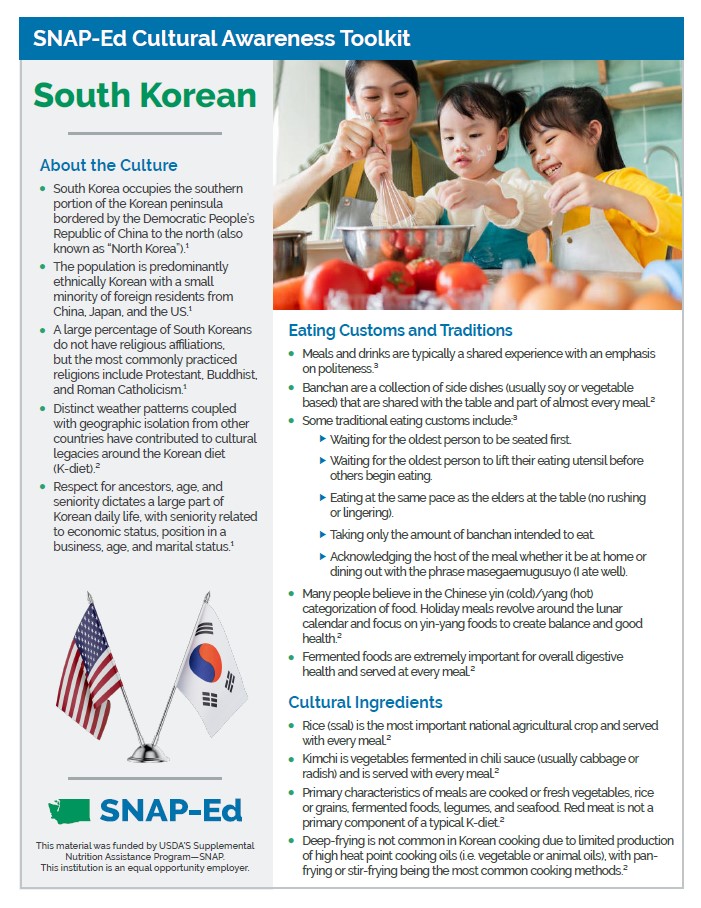
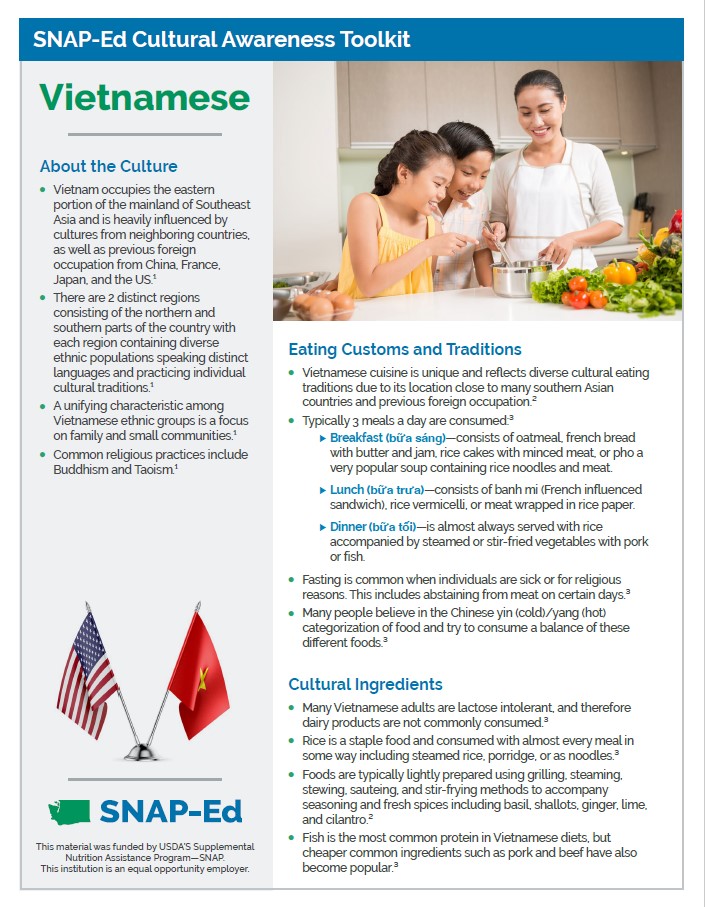
These toolkits include culinary/dietary summaries of several cultural groups that are most highly represented in Washington state. The information included on each toolkit is not exhaustive nor is it representative of every individual. Remember that these are summaries of large groups, and may not be reflective of each person that identifies with these groups. You may use these toolkits to inform your programming, but we encourage you to continue to take a person-first approach to SNAP-Ed programming.
Please note, these materials are for print only.

NEW! Food Access Spanish Glossary (for print only)
The Food Access English-Spanish Glossary contains Washington specific Spanish terms and words for food access related terms. Categories include food access terms, fruits, vegetables, grains, protein, dairy, dishes, cooking terms, and gardening terms. Please use this glossary to help make sure your Spanish translations Washington specific!
EatRight: The Academy of Nutrition and Dietetics
- National Nutrition Month: Food Connects Us:
- Tools to share information and experiences related to how food connects us to family, culture, tradition, memory, and community. Contains tip sheets, activities, games, social media guides and educational handouts in Spanish, Arabic, Chinese, Hindi and Tagalog.
- Global Foods for a Healthy Plate:
- Ingredients and dishes to incorporate into meals based on MyPlate guidelines. Includes information for Chinese, Italian, Greek and Mexican cuisines.
- Introducing New Flavors to Babies:
- General guidelines to introducing new foods to infants over 6 months old that can be adapted based on cultural practice.
EthnoMed: Cultural Information
A Washington-based ethnic medicine guide. The culture section provides information about cultural beliefs, nutrition practices and articles on dietary patterns for immigrant communities in WA state.
Food and Agriculture Organization (FAO): Food-based Dietary Guidelines
Dietary guidelines for more than 100 countries used for consumer education. Individual country pages are only available in English and may not necessarily be endorsed by the FAO.
Harvard School of Public Health: The Nutrition Source
Links for information around healthy dietary patterns, specific food groups and different dietary restrictions. Contains information for specific cultural food ingredients and easily adaptable resources for culturally relevant educational materials.
Oldways: Cultural Food Traditions
A non-profit whose mission is to “inspire people to embrace the healthy, sustainable joys of the old ways of eating.” Contains information on and recipes for traditional Mediterranean, African, Latin American and Asian diets.
CalFresh: Eat Fresh
A diverse collection of recipes from multiple cultures and communities including African, Asian Pacific Islander, Native American, Latinx, Soul Food, Asian, Middle Eastern and Italian.
Common Threads
A non-profit that “aspires to build communities that embrace healthy cooking, healthy eating and celebration of culture.” Contains recipes for diverse cultural communities in English and Spanish.
Eat Smart, Move More: MyPlate Inspired Dishes from Around the World
Adult and kid-friendly recipes based on MyPlate framework including meals from Nigeria, Mexico, Israel, India and China.
WSU Kitsap County Extension
Guatemalan and Filipino recipes created by Kitsap County Extension SNAP-Ed in collaboration with Kitsap Conservation District.
North Dakota Food and Culture: A Taste of World Cuisine
Traditional recipes for everyday meals to special occasions from around the world including Bosnia, Germany, India, Iran, Liberia, Mexico, Indigenous Americans/Alaskan Natives, Norway, Somalia, Sudan, and Vietnam.
Below are links to a diverse array of educational resources and materials translated into over 40 languages.