
Health Equity
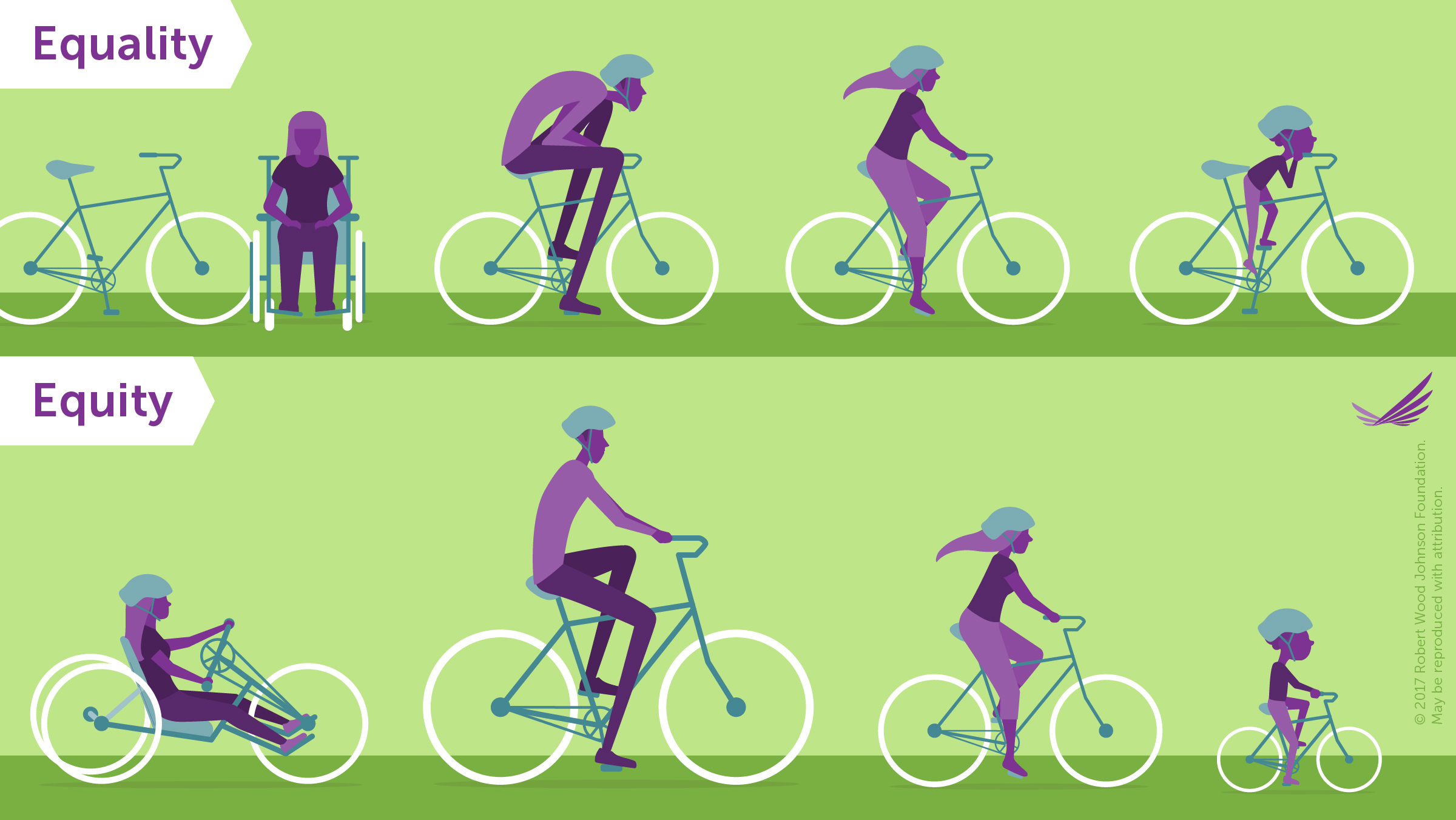
“Health equity means that everyone has a fair and just opportunity to be as healthy as possible. This requires removing obstacles to health such as poverty, discrimination, and their consequences, including powerlessness and lack of access to good jobs with fair pay, quality education and housing, safe environments, and health care.” –Robert Wood Johnson Foundation report, What is Health Equity?
While SNAP-Ed focuses specifically on income for identifying the target audience, addressing health equity requires acknowledging the intersectional issues of racism, trauma, and systemic oppression. Fundamentally, SNAP-Ed program delivery must be culturally competent in order to effectively reach participants from different backgrounds. Cultural competency enables a person or system to understand and respectfully respond to different racial/ethnic backgrounds, cultures, religions, and other diverse attributes. Individuals with cultural competency are also able to recognize and affirm the value of others in their community who have a background different from their own. A system that is culturally competent promotes awareness, knowledge, and sensitivity to underlying biases. Furthermore, the FFY21–23 State Plan also highlights prioritizing participant representation in programming to ensure work is relevant and meets community-identified needs.
Efforts to promote equity, dismantle racism, and create inclusive environments are key to delivering just and fair programming.
Further Learning
The National Association of County and City Public Health Officials (NACCHO) has created a web-based course for public health workers seeking more in-depth knowledge of the root causes of health inequities, and how to apply that knowledge to their day-to-day work.
The Basics About Health Equity
Info from Government Agencies
Info from Public Health Non-Profit Agencies
- NIHCM Foundation – Systemic Racism is a Public Health Crisis
- American Public Health Association Health Equity Page
- Health Equity Institute – What is Health Equity (video)
Info About Childhood Adversity and Health Equity
Food Justice and Working with Food Banks
Anti-Racist Assessment Tool for Food Banks: offers an accurate way to personally assess where your food bank, pantry, or other organization is in your anti-racism journey while also creating a path forward to where you want to be. This assessment comes from our Community Perspectives Report and recommendations which can be found here. This tool was funded by the Centers for Disease Control and Prevention as part of the REACH (Racial and Ethnic Approaches to Community Health) grant.
Sharing Power, Building Community: a new report that discusses what works in nutrition education at food pantries/banks and how these programs can best fit the needs of customers by nourishing bodies, building community, leveraging assets, and redistributing power.
- Download Full Report (PDF) here.
- Download Report Summary here (PDF)
Northwest Harvest Community Perspectives: This page has resources for working with food banks including videos and brochures in multiple languages about what to expect when you visit a food bank.
Food Shopper Equity: This site, developed by Northwest Harvest in partnership with other organizations, offers resources for food banks to make policy, systems, and environmental changes to promote a more equitable food shopper experience.
Resources for Culturally-Relevant Programming
For Programming in General
Northwest Harvest Equity Filter
Webinar: “Youth in Action: Conversations about Our Future – Indigenous Food Sovereignty”
Resources about food from National Museum of the American Indian:
Land Acknowledgement Resources
Learning and Action You Can Take to Improve Health Equity
Books for Further Learning
- So You Want to Talk About Race by Ijeoma Oluo
- How to Be An Anti-Racist by Ibram X. Kendi
- Blind Spot by Mahzarin Banaji and Anthony Greenwald
- Creating the Opportunity to Learn by A. Wade Boykin and Pedro Noguera
- White Fragility by Robin DiAngelo